
 English
 Ελληνικα

Corinthia is one of the regional units of Greece. it is named after the hero Korinth, himself a descendant of the god Hermes. It is part of the region of Peloponnese a prefecture rich with natural beauty, dense forests, beautiful beaches with crystal clear waters, lakes, picturesque seaside and mountain villages, and a great past. The prefecture of Korinthia has been inhabited since prehistoric times and has experienced a great prosperity in antiquity, with the Ancient City of Korinthos, the Ancient city of Nemea and Akrocorinthos being focal points. The Corinth Canal, carrying ship traffic between the Ionian and the Aegean seas, is about 4 km east of Corinth, cutting through the Isthmus of Corinth. Corinthia is increasingly seen as part of the wider metropolitan area of Athens.
From 1833 to 1899, the Corinthia prefecture included Argolis and was known as Argolidocorinthia. It included Hydra, Spetses and Kythira. Argolis joined Corinthia to reform Argolidocorinthia again in 1909. Forty years later, in 1949, the prefecture was finally separated from Argolis.
The region is so closely linked with legend, that sometimes traces of its history are lost in myth. Two of the four major religious observances/sporting events took place in the district’s cities of Isthmia and Nemea, attracting participants and pilgrims from all over the country.
Visitors who want to relax by the sea, enjoy the nature by exploring the mountain villages and forests, feel the splendor of antiquity by visiting the archaeological sites and also the Corinth Canal, a relatively modern feat of engineering. Isthmia: The Isthmian games were held in honor of Palaimon, who drowned in these waters and was worshiped as a local deity.
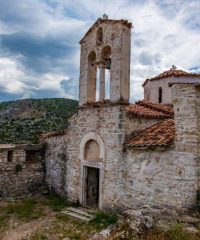
At a pine-tree area, 3 km from Chiliomodi, is the Monastery of Faneromeni, which is dedicated to the Dormition of the Virgin Mary.
In 1854 the Monastery of Faneromeni,suffered a lot of damages due to an earthquake and in 1896 the brotherhood of monks was transferred lower, to the new monastery.
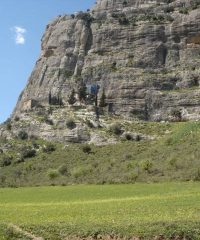
The monastery "Our Lady of the Rocks" is located on the east side of the rock called Polyfeggos, in the mountain of Panagia (Our Lady)
The monastery of Our Lady of the Rock was at its peak since the beginning of the 19th century until the period of Kapodistrias. During the Greek War of Independency it contributed a lot to the cause.
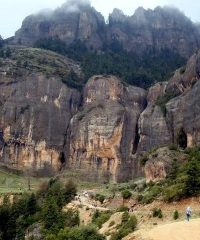
The chapel of Lady of the Rock was built as a fulfillment of a vow made by a tarsian woman
From the village of Kato Tarsos after walking about 1.5 km, along with the spectacular view of Ziria, a magical place comes into view.

Stymphalia belongs to the European Network of Protected Areas NATURA 2000.
The Environment Museum of Stymphalia, whose aim is to show the interdependence of mankind and Nature