
 English
 Ελληνικα

Greece is literally a vast archaeological site. As the country was already inhabited from prehistoric times, traces of human civilization can be found everywhere, in all corners of the land.
The past penetrates forcefully into the present and the future, creating a precious, indelible ‘patchwork’.
The major archaeological sites in Greece every year attract hundreds of thousands of visitors. People from all over the world come to see at close hand the origins of western civilization and to feel the power and vitality exuded by these sites.The rich heritage of the Greek history spanning back four and a half thousand years has sown the harsh grounds around the Aegean with stones and artifacts that blossom for centuries.

On the Kythera island the most characteristic monument is the castle of Chora!
The “Eye of Crete” as it was also called due to its strategic position, providing the observance of ships on three seas simultaneously – the Ionian, Aegean and Cretan.

The causes that justify such a large number of buried babies have not been identified until today.
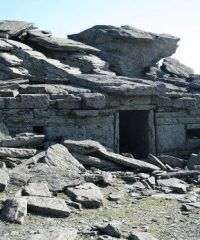
The most impressive of all the Drakospita of Evia is the one located on Mt Ochi, at an altitude of 1389 metres, above the town of Karystos.
A very challenging archaeological wonder lies in the area of Southern Evia: it’s the 25 famous huge constructions called Drakóspita (=Dragonhouses)

The path connects the temple of Tavropos Artemis and the beautiful beach Na.
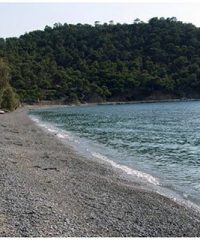
Kanakia, archaeological excavations and crystal clear blue water
Archaeological excavations in Mycenaen Acropolis at Kanakia and the most wonderful accessible beach in Salamis