
 English
 Ελληνικα


There were dozens of natural and artificial lakes in Greece, as well as many lagoons. Most lakes are freshwater and have formed mainly far from the coastlines as a result of tectonic or volcanic forces, or from the melting of glaciers. Lagoons -which are shallow coastal water reservoirs connected to the sea via a wider or a narrower opening- can be converted to freshwater lakes when the inflow of saltwater from the sea is for some reason interrupted and an adequate inflow of freshwater occurs from flowing drainage basins.
There are also lakes with salt or brackish water, when the substratum contains many soluble salts or it receives an inflow of saltwater. Artificial lakes, which are created by the construction of dams in brooks, streams or rivers in order to store water for various objectives (irrigation, farming, drinking water, etc), is the most important category of artificial (man-made) wetlands in Greece. They cover a considerable area and have contributed to the creation of significant ecosystems in the Greek wetland chapter.
Greece has internationally significant protected wetlands that are included in the International Convention of Ramsar (1971).

Seven Springs is the refreshing and relaxing haven for travelers on the island of Rhodes
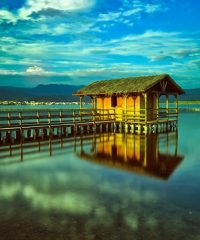
The Messolonghi-Etoliko lagoon is the largest in Greece and one of the largest in the Mediterranean.
The lagoon of Messolonghi is classified as Environmental Park and is protected by the Ramsar Treaty and it is also included in the Natura 2000 network.
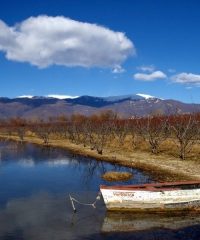
Vegoritida is also referred to as Lake Ostrovo, while its other three names are Lake Arnissa, Lake Kelly and Lake St. Panteleimon.
One of the largest natural lakes in our country, Vegoritida, although it has undergone significant alterations from human activities.

The waterfalls of Dimosari are next to the most tourist and cosmopolitan part of the island Nydri, but the tranquility of the landscape is unique.