
 English
 Ελληνικα


Amorgos is a Cycladic island in the Aegean Sea. It is located at the southeastern edge of the Cyclades, southeast of Naxos. It has two natural harbors, Katapola and Aegiali. The capital is the Chora.
Permanent residents of the island are 1,859 (according to the 2001 record) who are involved in fishing, livestock farming and agriculture.
Amorgos is an ideal hiking destination. There are paths that start and / or end up in a settlement and offer the visitor stunning natural landscape views.
Amorgos was scene to Luc Besson’s cult movie “The Big Blue”. The Big Blue (French: Le Grand Bleu) is a 1988 English-language film. You should watch this movie before you go to Amorgos.
Amorgos you will get a taste of the Greek hospitality. Its inhabitants have been tested for many years, as it has deliberately been declared as “the island of the infrequent line”. They have been deprived of communication and now (that the island is growing rapidly) the Amorgians generously give out unforgettable moments to whoever chooses to visit their island.
The Amorgians are good people, proud and, despite the increase in tourism over the last few years, they have remained pure and true to the manners and customs of their land.
Psimeni raki is a local homemade liquor with flavour of honey, cinnemon and clove, made since ancient times on Amorgos.

The monastery was built in 1088 and was renovated by Byzantium emperor Alexios Komninos.
The most important religious and cultural monument of Amorgos is the Monastery of Panagia Hozoviotissa
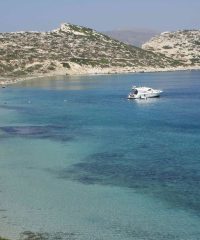
Nikouria is a small uninhabited island which is very close to Agios Pavlos, 5 km from the port of Aegiali.
There are 3 nice sandy beaches and the water is calm and clear, a very good fishing spot. You can take the small transfer boats that leaves every 30 minutes from Agios Pavlos.
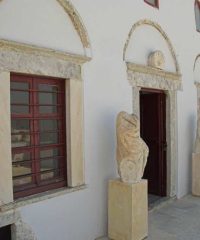
The museum contains some interesting pieces excavated on the island including remnants of the Minoan civilisation
The museum is located in Chora and housed in a traditional old mansion known as Sala tou Gavra